How to Choose the Right Excavator Attachment for Your Machine
Machine size is only the starting point. Here’s what else you need to consider before ordering an excavator attachment.
Buying an excavator attachment isn't always as simple as matching an attachment to the tonnage of your machine.
Machine weight is an important starting point, but correct attachment selection can also depend on your machine make and model, pickup dimensions, quick hitch setup, hydraulic requirements and, most importantly, what you're actually trying to achieve.
Before ordering an attachment, there are a few things worth checking.
1. Start With Your Excavator Make & Model
The first thing we need to know is exactly what machine the attachment is going on.
For example, telling us you have a "5-tonne excavator" gives us a starting point, but supplying the make and model allows us to narrow down the correct attachment size and check the information we have available for that machine.
Different machines within a similar weight class can have different pickup dimensions, hydraulic capabilities and attachment requirements.
Whenever possible, provide the full make and model of your excavator.
2. Don't Rely on Machine Weight Alone
Attachments are generally grouped into machine weight ranges — such as 1.5–2.5 tonne, 3–5 tonne, 6–8 tonne or 10–15 tonne.
These ranges are useful for identifying the appropriate attachment size, but they don't guarantee that an attachment will physically fit your machine.
Two excavators weighing approximately the same can have completely different attachment pickups.
That's why fitment needs to be confirmed before ordering.
3. Check Your Pickup Dimensions
For many excavator attachments, we'll need to confirm three important measurements:
Pin Diameter
The diameter of the attachment pins.
Pin Centres
The distance from the centre of one pin to the centre of the other.
Between the Ears
The internal width between the attachment mounting ears.
These measurements help us confirm the correct pickup or head bracket for your machine.
Even where we already have specifications on file for a particular excavator model, we may ask you to confirm your measurements before manufacture or dispatch.
It only takes a few minutes to check and can save a much bigger headache when the attachment arrives.
4. Are You Running a Quick Hitch?
Let us know whether the attachment will be fitted through a quick hitch or directly to the excavator.
This can affect the pickup configuration and attachment selection.
If you're replacing an existing attachment, the pickup dimensions from an attachment that currently fits your machine can also be useful when confirming fitment.
Don't assume that every attachment advertised for your excavator model will automatically suit your existing quick hitch.
5. What Are You Actually Using the Attachment For?
This is just as important as knowing what machine you have.
Two customers with identical excavators may need completely different attachments depending on the work they're doing.
Are you:
- clearing vegetation?
- handling logs or timber?
- sorting demolition material?
- moving rocks?
- digging trenches?
- drilling holes?
- compacting?
- ripping hard ground?
- processing material?
- loading or handling scrap?
The application helps determine the appropriate attachment type, size and configuration.
Rather than simply asking "Will this fit my excavator?", tell us what you're trying to achieve.
We may be able to recommend an option better suited to the job.
6. Hydraulic Attachments Need a Few Extra Checks
If you're looking at a hydraulic attachment, physical fitment is only part of the equation.
Depending on the attachment, we may also need to consider your machine's available hydraulic flow, pressure, auxiliary circuits, return lines, case drain requirements or electrical controls.
This becomes particularly important with attachments such as:
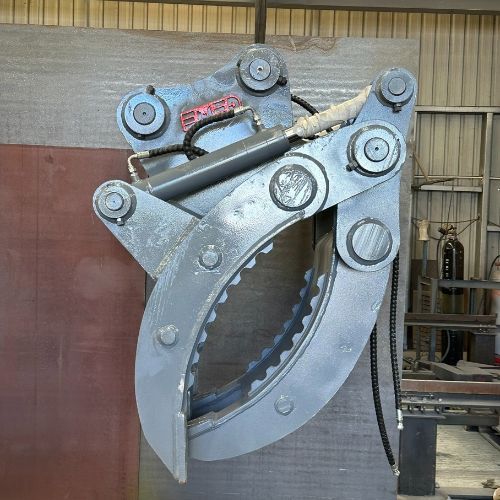
- rotating grabs;
- grapple saws;
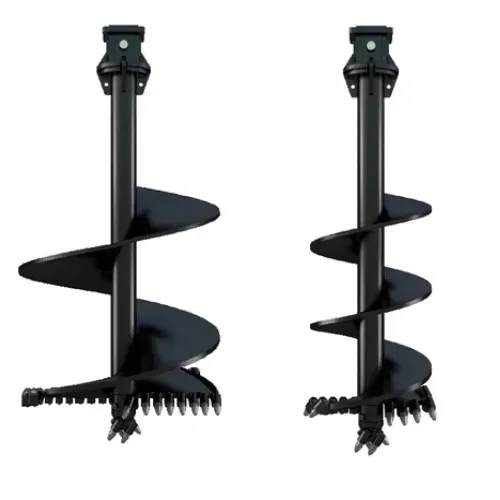
- auger drives;
- hydraulic compactors;
- tree shears;
- rotating or tilting attachments; and
- other hydraulically powered equipment.
Not every hydraulic attachment has the same requirements.
We'll let you know what information is required for the particular attachment you're considering.
7. Bigger Isn't Always Better
It can be tempting to choose the biggest attachment your excavator can potentially carry.
That isn't always the best option.
The attachment's own weight affects the machine's available lifting capacity, stability and overall performance.
This becomes even more important with attachments that are carrying additional material, timber, rock or demolition waste.
The right attachment should suit both the excavator and the work you're asking it to perform.
8. Think About the Complete Setup
Depending on the attachment, there may be more involved than simply fitting it to the end of the excavator.
The complete setup may include:
- head brackets or pickups;
- hydraulic hoses and fittings;
- machine-side connections;
- electrical controls;
- additional hydraulic circuits;
- flow control;
- installation; or
- machine-specific modifications.
Ask what's included with the attachment and whether anything else will be required to get it operating on your machine.
9. Check Before You Order
Before ordering an excavator attachment, have the following information ready:
- excavator make and model;
- machine operating weight;
- pin diameter;
- pin centres;
- between-ear measurement;
- whether you're using a quick hitch or direct pin;
- the type of work you'll be doing; and
- for hydraulic attachments, any machine hydraulic information requested for that particular product.
If you're unsure how to measure your pickup, ask us.
We would much rather confirm the information before the attachment is ordered than discover a fitment issue when you're ready to put it to work.
Getting the Right Attachment
Choosing the right excavator attachment isn't just about finding something that physically connects to your machine.
It needs to suit the machine, fitment and application.
At HFP Attachments, we can help with attachment selection, machine fitment and pickup configurations across our excavator attachment range. Where required, we can also manufacture or modify pickup configurations through our Australian engineering and manufacturing operation.
If you're not sure which attachment is right for your machine, send us your machine make and model and tell us what you're trying to do.